
Pop art arrived in the 1950s and exploded through the 1960s as one of the most deliberate provocations in modern art history. It took the ordinary and made it monumental. It borrowed from advertising, comic books, supermarkets, and celebrity culture and presented those sources back to the world at a scale and confidence that demanded attention. The pop art symbols that emerged from this movement are among the most reproduced and referenced images in visual culture, and understanding what made them powerful explains why they have never really gone away.
The Campbell’s Soup Can: Ordinariness as Radical Statement
Andy Warhol’s decision to paint thirty-two Campbell’s Soup cans in 1962 was not accidental or arbitrary. It was a precise artistic argument about consumer culture, repetition, and the nature of art itself. By presenting a supermarket product with the same care and attention typically reserved for portraiture or landscape painting, Warhol forced viewers to confront their assumptions about what deserved to be called art and what did not.
The Campbell’s can became one of the defining pop art symbols because it captured something true about postwar American life. Mass production had made identical objects available to every household regardless of income. The soup can in a working-class kitchen and the soup can in a wealthy one were the same object. Warhol understood that this uniformity was itself a cultural statement worth examining, and his paintings made that examination unavoidable.
The visual language of the can, its clean typography, its bold red and white color scheme, and its reassuring familiarity translated perfectly into the flat, graphic aesthetic that defined the movement. Pop art symbols derived from product packaging worked precisely because they were already designed to communicate instantly and clearly. Warhol and his contemporaries simply repurposed that commercial clarity for artistic ends.
Ben-Day Dots: The Texture of Mass Reproduction
Roy Lichtenstein took a different route to similar territory. Where Warhol used repetition and scale, Lichtenstein used the mechanical texture of mass-printed imagery itself as his primary visual language. The Ben-Day dot, the pattern of small colored dots used in cheap offset printing to create the illusion of color gradation, became the most recognizable technical element in his work and one of the most enduring pop art symbols of the entire movement.
The dots were visible in newspaper comics and pulp magazine illustrations because the printing process was too crude to disguise them. Lichtenstein enlarged this imperfection to a monumental scale, turning a limitation of cheap reproduction into the central aesthetic of paintings that sold for millions. The irony was deliberate and pointed. He was celebrating the visual language of disposable culture while simultaneously transforming it into high art with enormous commercial value.
What makes the Ben-Day dot significant as a pop art symbol is that it functions on multiple levels simultaneously. As a texture, it is immediately recognizable and visually engaging. As a concept, it raises questions about originality, reproduction, and the relationship between high and low culture that remain relevant today. Contemporary designers and illustrators continue to use the dot pattern as a direct reference to Lichtenstein’s legacy, confirming its status as one of the most durable visual shorthand codes in modern design.
Marilyn Monroe: Celebrity as Commodity
Warhol returned to the subject of mass reproduction with a different source material when he began his Marilyn Monroe series in 1962, shortly after her death. The silkscreened portraits, reproduced in multiple color variations from a single publicity photograph, transformed a human being into something closer to a logo. The repetition emphasized the extent to which Monroe’s image had already become a product before Warhol touched it.
Among pop art symbols, the Marilyn portraits occupy a particularly complex position. They are simultaneously glamorous and disturbing, celebratory and critical. The garish colors, the slightly misregistered printing, and the reduction of a face to a flat graphic image all suggest something has been lost in the process of celebrity manufacture. Whether Warhol intended that critique or was simply engaging with materials he found fascinating is a debate that has never been fully resolved, which is part of what keeps the work alive.
The cultural staying power of these images reflects how accurately they captured something about celebrity that has only become more true in the decades since. The relationship between a public figure and their image, between a person and the commodity their likeness becomes, is now a central anxiety of contemporary culture in ways it was not fully in 1962. Warhol’s Marilyn portraits function as pop art symbols not because they document a moment but because they anticipate a condition.
Comic Book Speech Bubbles and Melodrama
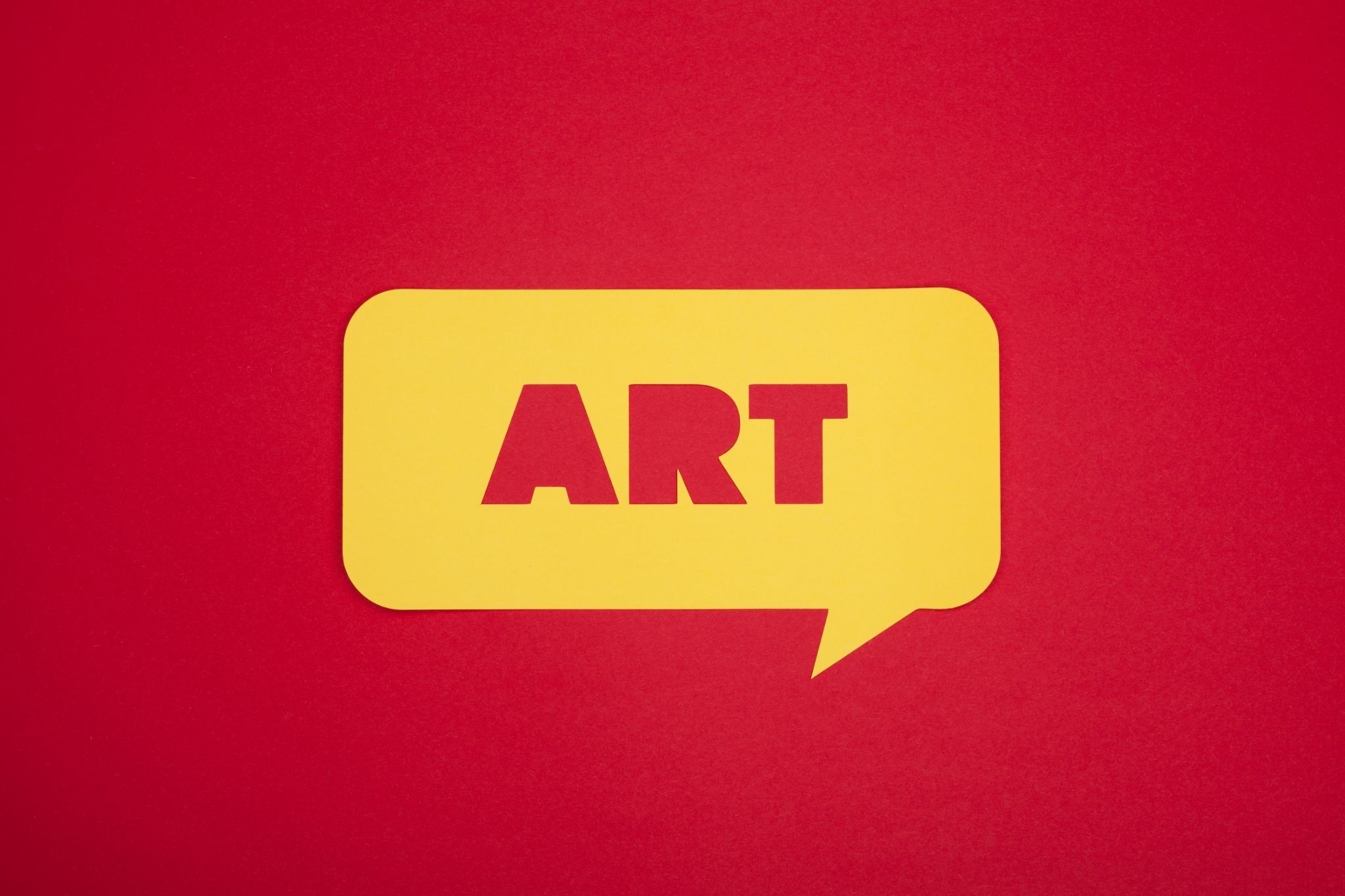
Lichtenstein’s borrowing from comic books extended beyond the Ben-Day dot texture to the narrative conventions of the genre itself. The oversized speech bubble, the close-cropped dramatic scene, the single frozen moment of intense emotion taken from a sequence designed to be read quickly and discarded. These became the compositional framework for paintings that asked viewers to look at what they normally glanced past.
The speech bubble as a pop art symbol carries specific cultural weight. It represents a form of storytelling considered unworthy of serious attention, mass-produced narratives for children and working-class readers that the art world had never considered legitimate subject matter. By placing these conventions inside the frame of a gallery painting and executing them with obvious technical skill, Lichtenstein made the dismissal of comic culture itself the subject of the work.
The emotional content of these scenes also mattered. Lichtenstein chose panels depicting extreme romantic distress, warfare, and domestic crisis, the most melodramatic moments from genres designed to produce strong emotional responses in young readers. Presented at large scale in a gallery context, that melodrama read differently, simultaneously more absurd and more affecting than the source material intended. The tension between the emotional content and the mechanical visual style is what gives these pop art symbols their lasting grip.
The American Flag and Everyday Objects as Symbols
Jasper Johns preceded the Pop Art movement proper but provided much of its conceptual foundation through his paintings of flags, targets, and numbers in the late 1950s. His American flag paintings in particular established a template that the pop artists developed extensively. By painting a flag using encaustic and collage, Johns asked whether he was painting a flag or a painting of a flag, and whether the difference mattered.
This question became central to how pop art symbols functioned throughout the movement. Objects chosen for their familiarity were presented in ways that made their familiarity strange. The flag, the target, and the number were already images before Johns used them. They existed in the world as visual signs with established meanings. Repainting them as art objects suspended those meanings long enough for viewers to notice they had been accepting them without examination.
The everyday object as pop art symbol reaches its fullest expression in the work of Claes Oldenburg, whose oversized soft sculptures of domestic and commercial objects transformed the familiar into the surreal. A giant clothespin, an enormous typewriter eraser, a monumental shuttlecock installed in a public park. These works used scale the same way Warhol used repetition, as a tool for defamiliarization that forced a second look at objects that familiarity had made invisible.
Coca-Cola and the Brand as Cultural Symbol
Warhol returned repeatedly to Coca-Cola as subject matter, and his observation about the drink captures something essential about what pop art symbols were examining. The Coca-Cola bottle looked the same whether the person drinking from it was a president or a factory worker. Brand identity had created a form of visual democracy that was genuinely new in human history, and Warhol found it as worthy of artistic attention as anything in the traditional canon.
The Coca-Cola bottle’s distinctive silhouette, its immediately recognizable contour design, made it ideal pop art material. It was already functioning as a visual symbol before any artist touched it. The commercial designers who created it had done the work of distilling a product into a memorable graphic form. Pop artists recognized that this process of visual reduction and memorability was not fundamentally different from what artists had always done, which was the point.
The brand symbol as a cultural artifact continues to be one of the most fertile areas of reference for contemporary designers, illustrators, and artists working in the tradition that pop art established. The critical examination of commercial imagery that defined the movement has not become less relevant as commercial imagery has proliferated. If anything, the questions pop art symbols raised about consumerism, reproduction, and visual saturation are more pressing now than they were when the movement began.
Why Pop Art Symbols Still Matter in Contemporary Visual Culture
The influence of pop art symbols on contemporary design, advertising, and visual communication is so pervasive that it often goes unnoticed. The flat graphic aesthetic, the bold color palettes, the willingness to use commercial imagery as legitimate visual material, the interest in repetition and reproduction as subjects in themselves are all standard tools in the contemporary designer’s vocabulary. They arrived there through the movement that Warhol, Lichtenstein, Oldenburg, and their contemporaries built from the raw material of postwar consumer culture.
What gives these symbols their enduring power is that the cultural conditions that produced them have not fundamentally changed. Consumer culture has only become more saturated, celebrity has only become more manufactured, and the line between commercial imagery and artistic expression has only become more blurred. Pop art symbols speak directly to that situation because they were created to examine it, and the examination has not lost its relevance.
Understanding these symbols and what they were doing culturally is not just art historical knowledge. It is visual literacy that sharpens the ability to read and create images with greater awareness of what they are communicating and why. That awareness is as valuable now as it was when these images first appeared on gallery walls and made the art world reconsider what was worth looking at.
Final Thoughts
Pop art symbols did not emerge from a vacuum. They came from a group of artists who looked at the world around them with genuine curiosity and refused to accept the cultural hierarchy that said some images were worth serious attention and others were not. That refusal produced some of the most recognizable and culturally significant visual work of the twentieth century, and its influence runs through virtually every corner of contemporary design, advertising, and visual communication.
The Campbell’s can, the Ben-Day dot, the Marilyn portrait, the comic speech bubble, and the Coca-Cola silhouette. These are not just art historical references. They are active visual languages that designers, illustrators, and brand builders continue to speak fluently because they carry meanings that have not been exhausted by repetition. If anything, repetition has only deepened them, adding layers of reference and reinterpretation that make them richer visual tools with each passing decade.
The lasting lesson of pop art is that significance is not inherent in subject matter. It is produced by how carefully and intelligently an image is examined and presented. Ordinary objects become extraordinary symbols when the right artistic intelligence is applied to them with genuine conviction. That principle does not belong to the 1960s. It belongs to anyone making visual work today who is willing to look at the familiar world with fresh eyes and ask what it is really saying.